

Kyoto in 4 Days: What Nobody Tells You Before You Go
Four days in Kyoto, Arashiyama, Nara and Kanazawa. What's worth the effort, what will drain you, and why early mornings are non-negotiable. The real guide.
TRAVELJAPAN
Kyoto looks exactly like the pictures. That's the problem.
Because when something looks exactly like the pictures, half a million other people have also decided they need to see it in person. At the same time. And suddenly the ancient temple you came to quietly absorb is more stressful than a Monday morning commute.
I spent four days in Kyoto and the surrounding area — including Arashiyama, Fushimi Inari, Nara and a day trip to Kanazawa. I'm not going to give you a romantic highlight reel. I'm going to tell you what it's actually like, what's worth the effort and what will drain you if you're not ready for it.
Day 1 — Kiyomizudera and the old city streets
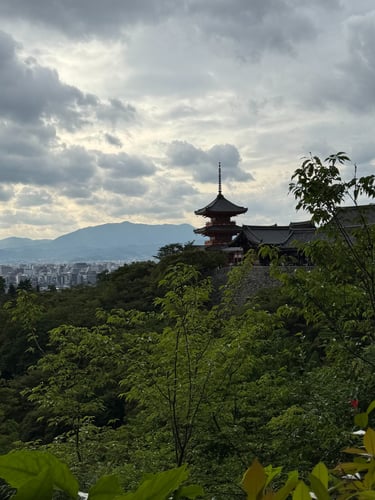
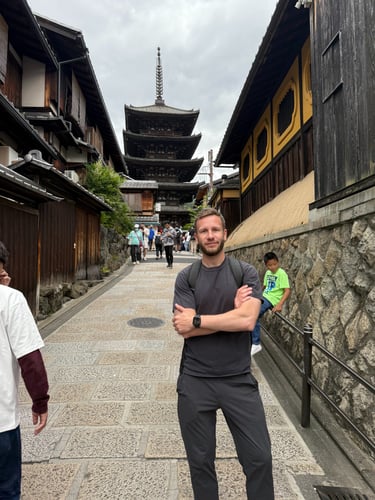
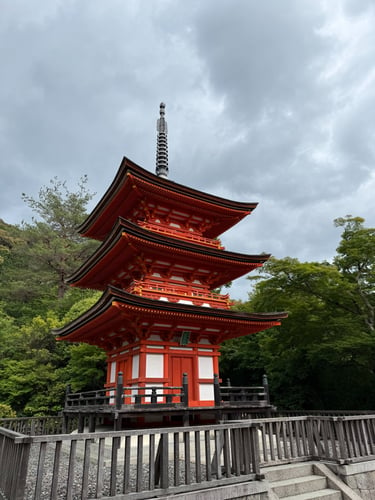
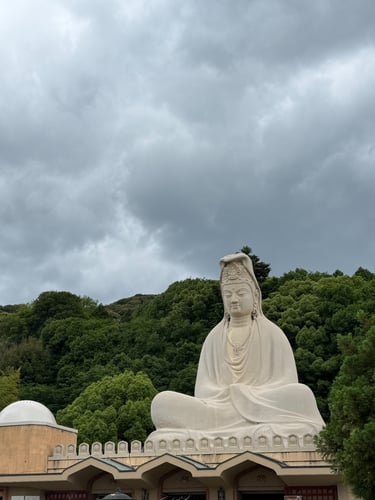
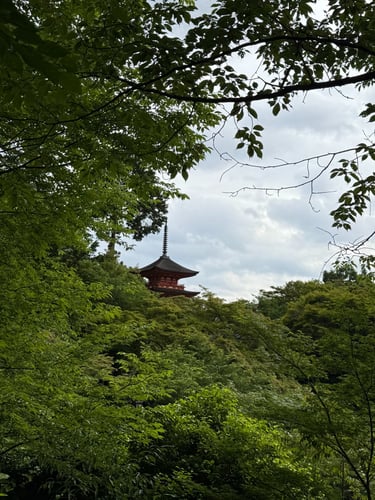
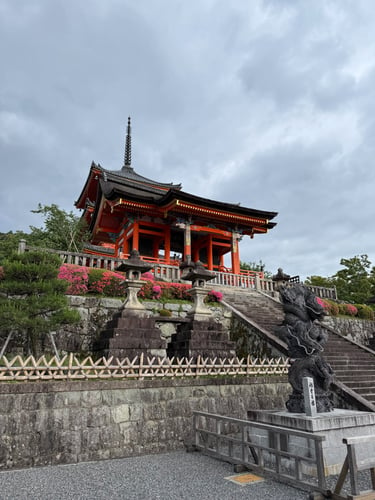
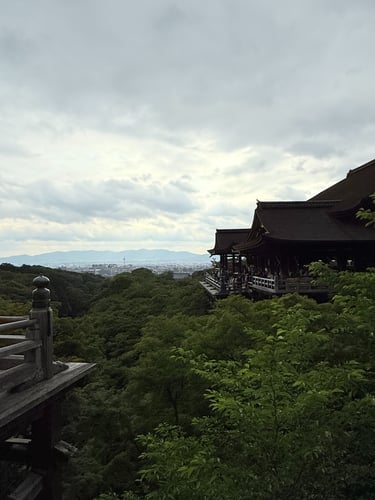
The classic Kyoto experience starts here: Kinencho Street, Yasaka-no-Tou, the cobbled lanes of Shimokawaracho, and eventually Kiyomizu-dera temple up on the hill. The streets are genuinely beautiful. Traditional wooden storefronts, stone steps, lanterns. It looks like a film set — and in the best possible way.
Here's the thing though. It's absolutely rammed.
I've been to a lot of busy tourist spots. I've done peak-season Barcelona, peak-season Santorini, the Vatican in July. None of them prepared me for this. I saw my first-ever human traffic jam here. Not a metaphor — an actual standstill, a crowd so dense you're shuffling centimetre by centimetre up a narrow lane. For the first time in a while, I found myself not enjoying a place I'd actually been excited about, simply because of the volume of people around me.
If you're imagining renting a kimono and doing a whole photo shoot here — be honest with yourself about how that's going to go when the street behind you is a wall of heads and selfie sticks. It's not impossible, but it's going to be a lot harder than the Instagram version suggests.
The honest recommendation: go early morning. Before 9am if you can manage it. Or, if you're arriving from Osaka or Tokyo in the afternoon, go straight there after lunch rather than waiting — the streets get progressively worse through the day. Either way, go in knowing what you're walking into. Manage the expectation and you'll still find something genuinely worth seeing. Just don't expect silence.
Day 2 — Arashiyama: bamboo, gardens and monkeys
Day two was the one I actually loved. The Arashiyama area is worth the effort — but only if you play it right.
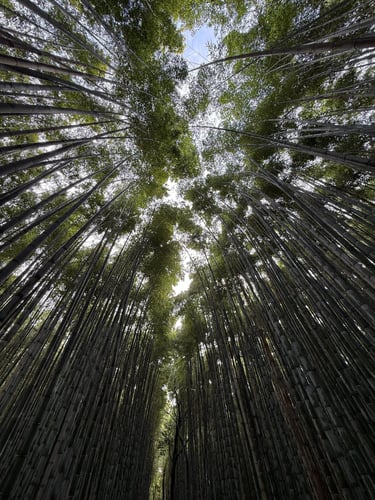
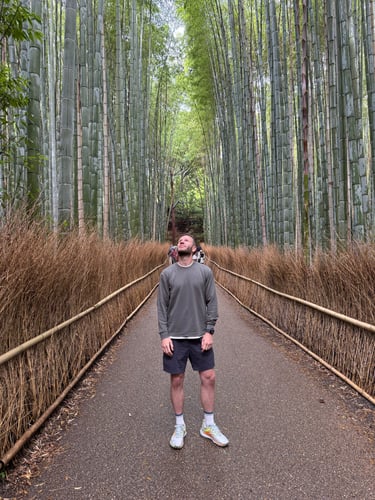
Bamboo Grove: be there before 8am
I'll be direct: if you arrive at the Bamboo Grove at 10am, you're going to be disappointed. The thing that makes this place special — the sound of the bamboo moving in the wind, that specific kind of forest quiet — disappears completely when you're sharing it with a crowd. Come early. I mean 7:30-8am at the latest, earlier if you can. The route through the forest itself is maybe 15-20 minutes, so it's a short window — but those 15 minutes early morning are completely different from the same 15 minutes two hours later.
Okochi Sanso Garden: one of the real highlights
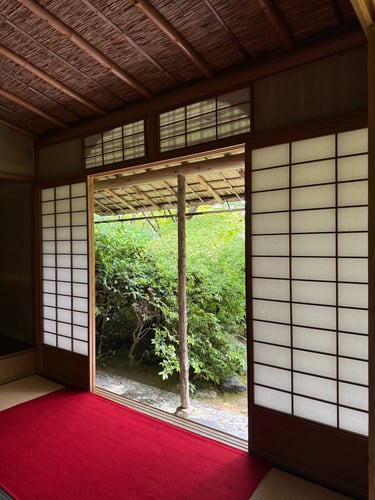
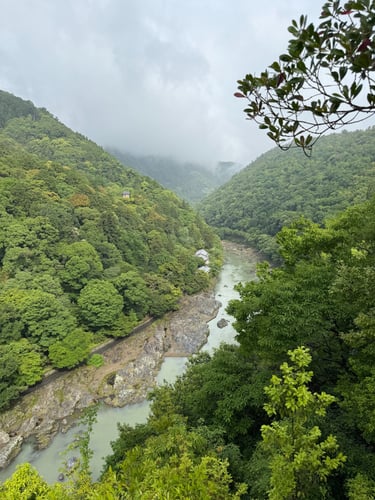
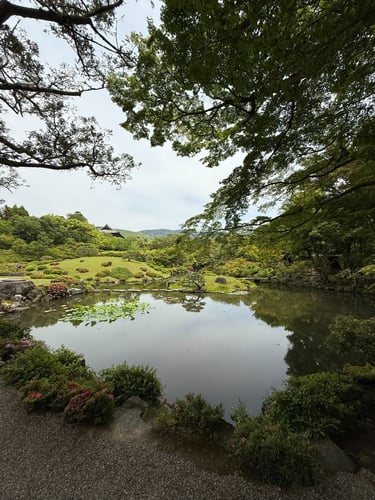
Right as you exit the bamboo forest, on the right side, is Okochi Sanso — the garden and villa of a classic Japanese film actor. This place genuinely surprised me. The observation deck gives you one of the best views in the area, the garden is immaculately kept, and the whole thing feels like it's been somewhat overlooked in favour of the bamboo.
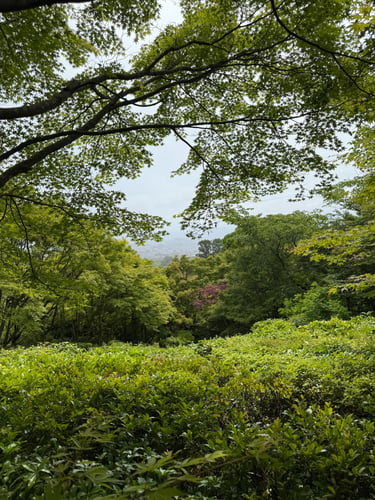
My recommendation is to time your bamboo visit so that you arrive at the garden just as it opens. If you're at the forest very early and the garden isn't open yet, turn left instead and head up to the Arashiyama Park viewpoint — it's a nice walk up through a forested hill with pavilions and views, and you can loop back around to the garden once it opens. The two are close together.
Arashiyama Monkey Park: commit to the walk
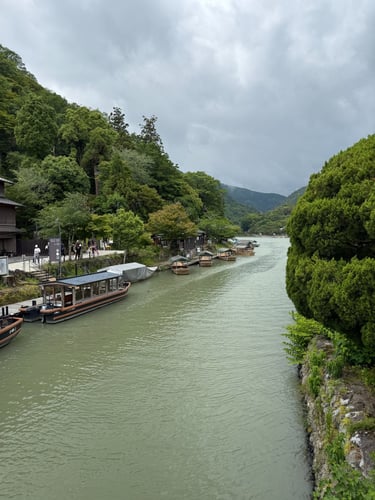
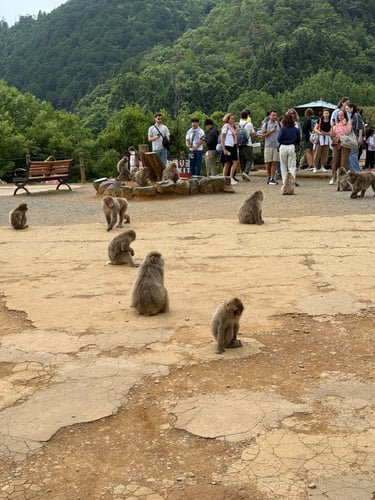
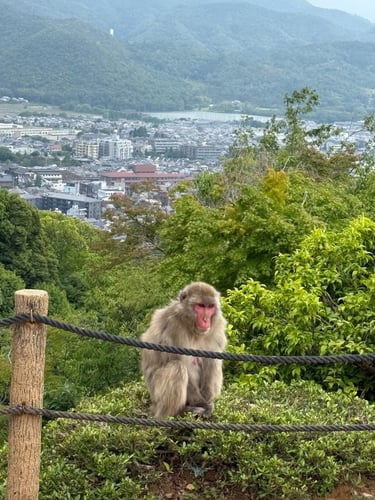
After the garden, walk down to the river and continue on to the monkey park. I want to be upfront: this involves a proper climb up a mountain. Stairs, more stairs, no shortcut. Plan for 30-40 minutes of real walking and dress accordingly. Comfortable shoes, water, no exceptions.
The monkeys themselves are... a lot. It's genuinely entertaining to watch them, and there's something odd and wonderful about seeing them in something close to their natural habitat rather than behind glass. But they're also wild animals and they behave like it. They will come up to you. If they think you have food, they can get pushy. I saw a bag get grabbed.
There's a cage near the top where you can go inside and feed them through the mesh — it flips the usual dynamic in a funny way, you're the one in the enclosure. If you buy snacks for them, choose fresh fruit or carrots over the processed options. They seem to actually want those and will ignore the rest, which is honestly relatable.
Day 3 — Fushimi Inari and Nara
Fushimi Inari Taisha: go early, go to the top
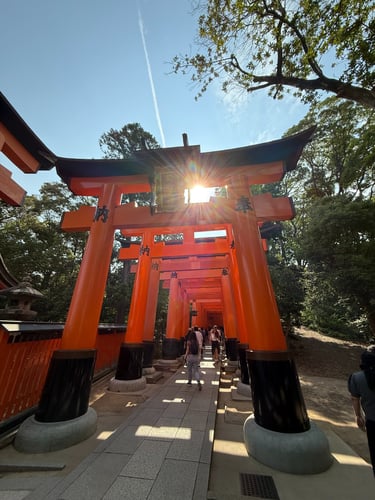
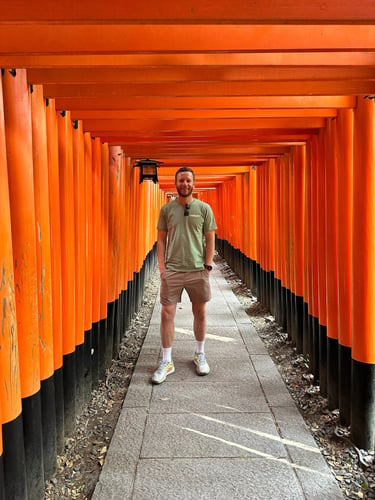
The famous thousands of orange torii gates winding up through the mountain. You've seen the pictures. The reality is: yes, it looks exactly like that — and it earns it.
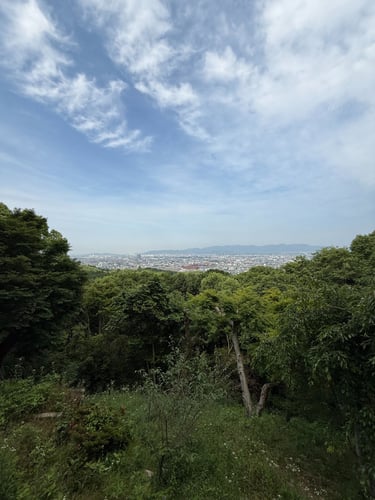
Early morning again. Non-negotiable if you want actual atmosphere rather than a queue. The higher you climb, the fewer people there are — a lot of visitors turn back well before the top, so the upper sections are quieter and the views are worth the effort. It's a real physical climb though. Comfortable shoes, plenty of water, especially in summer. By the time you reach the top you will be sweaty and tired and completely satisfied.
Nara: adorable deer, real warning
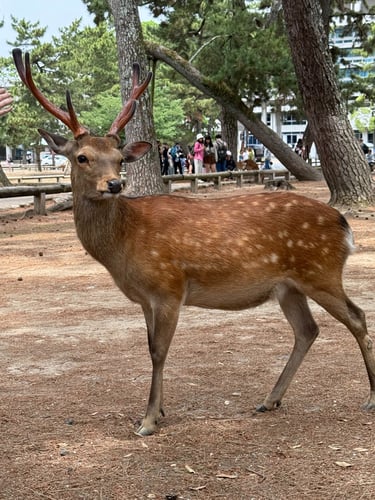
From Fushimi Inari, a short train ride brings you to Nara. The deer that roam freely around Nara Park are genuinely one of those things that seem too good to be true until you're surrounded by them. They bow for food — the same little inclined-head bow you see in Japanese greetings — which is either a learned behaviour or the universe being playful, and I choose to believe the latter.
I will tell you what happened to me because I think it's important: I got bitten. On the backside. I was giving a cookie to one deer and didn't notice another coming up behind me, and it took a proper bite. Not a nibble. A bite.
Good news: the deer in Nara are managed, and there's no disease risk — no injections needed, no drama. But the point stands. These are wild animals. Don't turn your back on them when you're holding food, don't get surrounded by a group of them if you can avoid it, and find one or two on the edge of the crowd rather than going into the middle. They look small and gentle right up until they decide they want what you have.
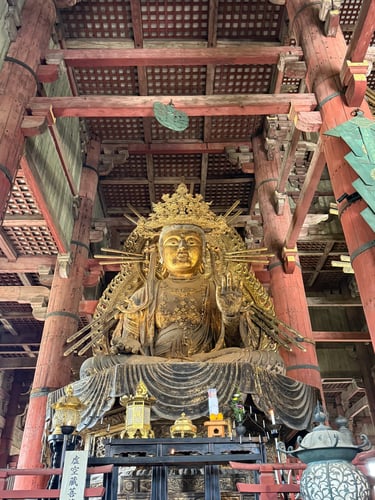
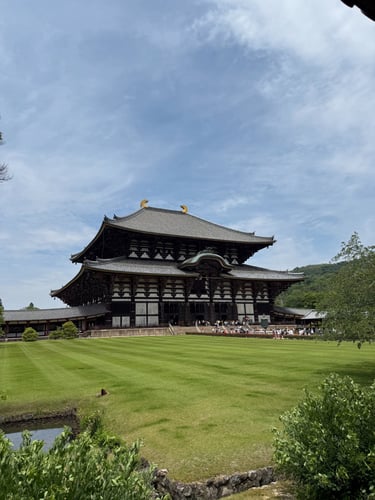
After the park, Kofuku-ji Temple is worth your time. It's a serious, large-scale Buddhist temple and the main hall houses a Buddha that stops you in your tracks — not because of any single feature but because of the scale of the whole thing. The architecture is beautiful. Give it at least an hour.
Also, practical note: it's smelly. A lot of deer, a lot of tourists, a lot of grass. Watch where you step.
Day 4 — Kanazawa: a different kind of day
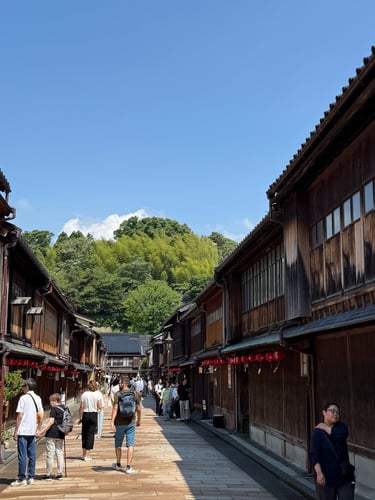
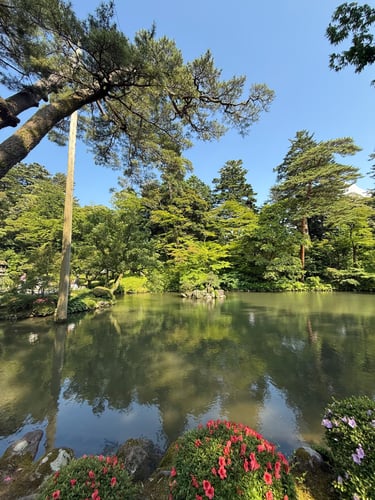
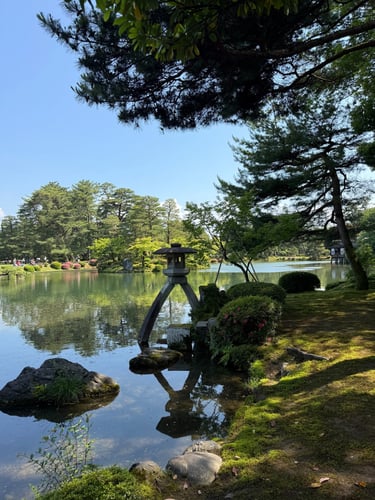
Kanazawa is a day trip but a genuinely different experience from the Kyoto intensity. Quieter, more spacious, beautiful Kenroku-en garden where you can also do a proper tea ceremony if you book it. Worth doing if you haven't done one yet.
21st Century Museum of Contemporary Art: book the pool slot first
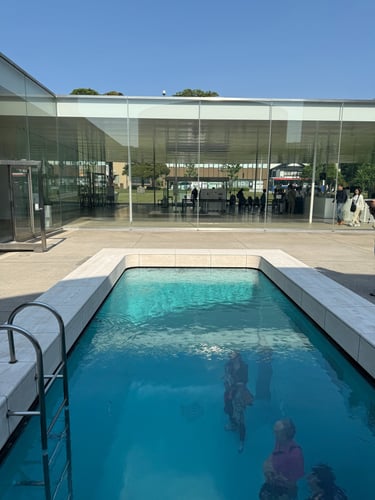
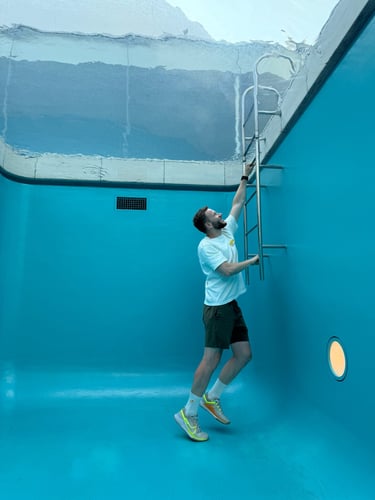
The centrepiece of this museum — and you've probably seen it on social media — is Leandro Erlich's swimming pool installation. You go into a room below the pool and look up through a layer of water at people standing on the surface above you. It shouldn't work as well as it does. It really works.
The key information: the pool slots are limited and they book up fast. As soon as you decide you're going to Kanazawa, book your pool slot. Don't leave it a day or two before — it may already be gone. The slot itself is around five minutes, enough time for the photos.
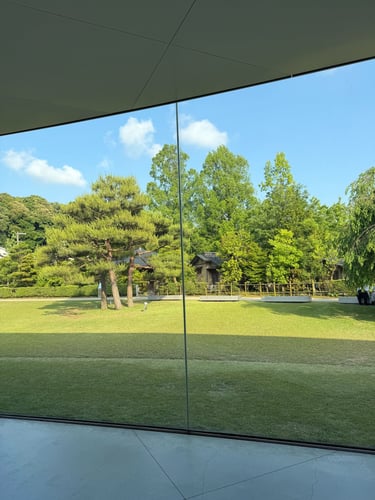
Beyond the pool, the museum is genuinely impressive. Japanese and international contemporary art, good quality across the board. I spent a couple of hours there and was still not rushed. There's a good café, a well-stocked shop, and when it's hot it's the perfect excuse to spend an extended time in air conditioning. Nobody is complaining.
Plat Home Kaza: go here
This restaurant genuinely surprised me. Creative cuisine, interesting cooking, proper thought put into the food. My expectations were not high going in and we left thinking it was one of the best meals of the trip. The Google Maps score of 4.4 is confusing and wrong. Find it here.
Book in advance. The good restaurants in this area go quickly.
On Kyoto itself: a few things worth knowing
Nishiki Market
You should walk through it if you're nearby, but manage your expectations. If you've been to the market in Osaka, this one will feel smaller and less alive. Close at around 3-4pm so don't leave it for the afternoon. The neighbourhood around it though — genuinely good. Bars, small restaurants, a slightly hipster-leaning atmosphere that I liked more than the market itself.
One thing nobody mentions: a lot of Kyoto's restaurants have open kitchens, and local cuisine uses a lot of oil. The cooking smell gets into your clothes. Really gets into them. Most hotels have a clothing deodoriser spray for exactly this reason — worth tracking one down, or picking up a can from a convenience store. You'll thank yourself the next morning.
Book your restaurants in advance
Kyoto gets a lot of tourists. The good places fill up. Book the day before at minimum, two days before to be safe. Don't rely on walk-ins at anything you actually want to eat at.
Bars worth knowing
All personally visited, all worth your time:
ガレージ Sake Bar Code 923 — Close to Nishiki Market. Sake flights, great snacks, genuinely fun way to spend an evening. Maps link
Garden Lab and Tea — Book this in advance. A tiny, quiet bar in a very traditional residential neighbourhood. Tea if you want it, cocktails if you need them — made mostly with local whisky and gin. The cocktails are outstanding and genuinely strong. Eat something first. Maps link
Masuya Saketen — Another solid sake option. Maps link
The honest verdict
Kyoto is real. The temples, the streets, the gates, the gardens — they deliver on what they promise. What nobody tells you is how much the crowds are part of the experience whether you want them to be or not. Early mornings are not optional if you want the version of this place that the pictures suggest is always there.
Go early. Wear good shoes. Drink water. Book the restaurants.
And get bitten by a deer at least once. It builds character.
A word on bad weather
If it rains, Kyoto has you covered. There's a genuinely good railway museum that I'd recommend specifically if you're travelling with kids — they'll love it, adults will find it mildly interesting. Various modern art and cultural museums fill out the options. So a rainy day here isn't a wasted day, it just shifts the agenda.

TheTimoTalks
Stay updated with a newsletter
hello@thetimotalks.com
© 2026. All rights reserved.
New guides, travel tips and hospitality insights worth your inbox space.
By subscribing you agree to our Privacy Policy. Unsubscribe at any time. No spam, promised.